URBANA – “Drug overdose is the leading cause of accidental death in the United States, and it’s not just killing people: it’s taking the lives of our dogs,” says an educational video from the University of Illinois College of Veterinary Medicine.
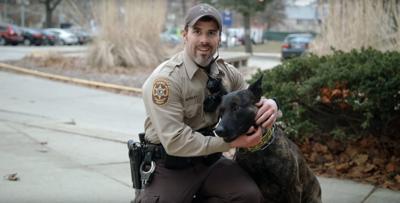
According to the video, dogs that work with police and other agencies are being exposed to deadly drugs in the line of duty frequently. The DEA issued a warning to all K-9 officers, explain that illegal street drugs are now being laced with compounds that are hundreds of time more potent than heroin.
The makers of the video say that one of those drugs, carfentanil, is so powerful that it is used by veterinarians to anesthetize large animals, like elephants.
Because of these dangers to working dogs, the veterinarians at the University of Illinois are taking action to prevent more of these canines from becoming the latest victims of the opioid epidemic.
Dr. Ashley Mitek, a veterinarian who works in the college’s Office of Public Engagement, says the college saw the effects of these drugs firsthand last fall when an officer with the Illinois State Police brought in his canine to the Veterinary Teaching Hospital Emergency Service for life-saving treatment of bloat.
“He told us that scent detection dogs are overdosing and dying from these new ultra-potent opioids, and their handlers really need veterinary advice on how to respond to a canine overdose,” Dr. Mitek explains.
Dr. Mitek says that spurred her to team up with Dr. Maureen McMichael, head of the hopsital’s small animal emergency medicine and critical care service and an expert in the emergency care of working dogs, to make sure this does not happen again.
The pair found others on the university campus who were eager to help; from the videography team in the Officer of Public Affairs to the director of the Police Training Institute, Dr. Mike Schlosser.
Unlike traumatic injuries, such as gunshot wounds, an opioid overdose can be reversed.
During an opioid overdose, handlers can quickly and easily administer the antidote, which is naloxone, also sold as Narcan. Taking this action on the scene will potentially stabilize the working dog, allowing for transport to the treating veterinarian for evaluation and continued care.
Naloxone reverses all opioids, including heroin and morphine. The College of Veterinary Medicine says most officers and emergency personnel carry it now and are trained to administer it on people. They just had never been taught to administer it to dogs.
That thought led to the idea of an open-access educational video to teach others how to give naxolone to dogs in their nose or muscle in case of an emergency. It is free to view and accessible to anyone with an Internet connection and device to view the video on. The video is primarily directed at veterinarians, who have a doctor-client relationship with the canine handlers.
This will not be the only collaboration between the University’s veterinarians and the Police Training Institute. Officials say they will continue to research the impact of opioids on working dogs and how it relates to their training. A new taskforce has also been formed to better study the issues and create new protocols for treating working dogs.
The full instructional video can be found here.