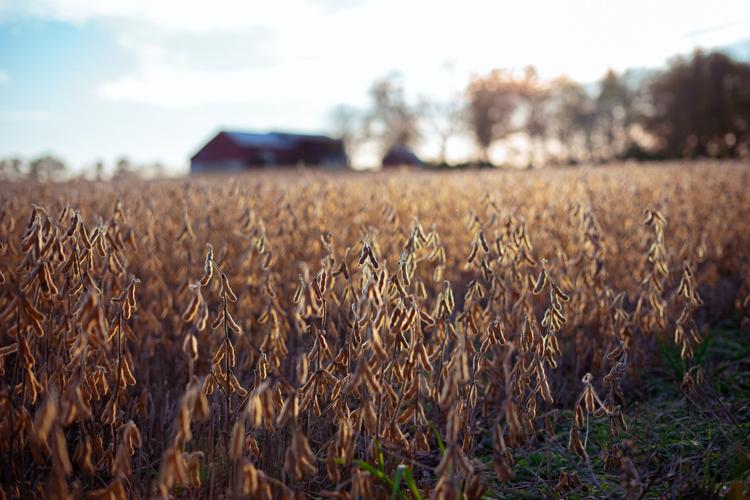
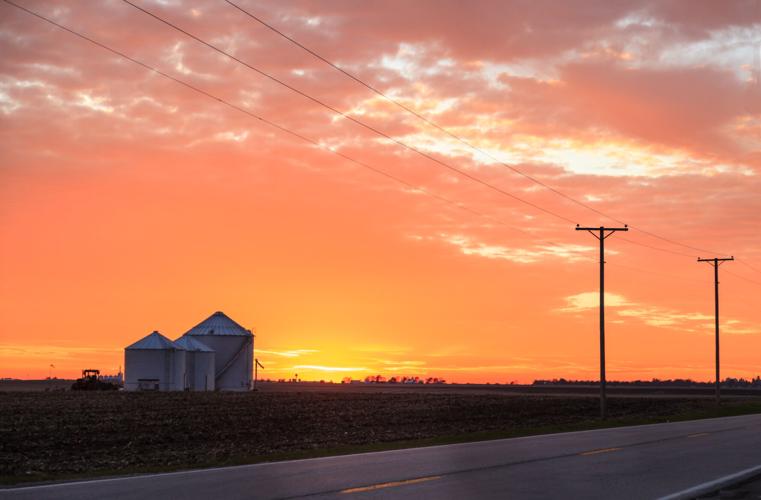
As the calendar turned from October to November, the harvest season among farmers in Central Illinois was winding down. Most of the region’s soybeans were already out of the ground, and the last remaining acres of corn weren’t far behind. And by all accounts, it’s been a good year—yields for soybeans have ranged from 68 bushels to the acre up into the mid-90s, while corn has soared from over 200 bushels per acre into the 280s.
“I expected it to be good. I didn’t expect it to be quite this good,” says Matt Hoose, Chief Agribusiness Officer at Prospect Bank, which for decades has offered lines of credit, loans to buy equipment, and other financial products integral to helping farmers in the region get to harvest. “Back in June we were extremely dry, and I would say we were seven to 10 days away from a crop failure; and then the rains came. So, the yields are up.”
Those yields are crucial to the financial wellbeing of Central Illinois farmers, who go without cash flow for 11 months of the year and make their money after the harvest comes in. And while yields are up, so is something else—interest rates, adding to the cost of using lines of credit or loans for new equipment. Which is why Hoose is advising his clients to take some of the profit from those yields and pay down any borrowed funds, to mitigate the impact of interest rates that have been hiked 11 times over the past 20 months.
“Now through February or March is when the money is going to be flowing in. But from March until October, there is no cash flow, so farmers use an operating line of credit,” Hoose says. “That’s why I say, even if you plan on using that line again in two or three weeks, pay it down. If you have a half a million-dollar line of credit at 8.5%, that’s a lot of money. So even paying it down for three weeks can make a difference.”
Highest rates since 2000
Although the Federal Reserve Bank held steady on interest rates at its most recent meeting in early November, the cost of borrowing money remains nearly three times as expensive as it was two years ago. The interest rate hikes, which the Fed is using to try and tamp down consumer spending and as a result curb inflation, pushed the 30-year mortgage rate in late October to 7.79%—the highest it’s been since late 2000.
That mortgage rate is very comparable to the rate farmers are facing for lines or credit or other loans. While still lower than the double-digit interest rates that borrowers faced throughout the 1980s and early ’90s, the current rates are a shock to those who grew accustomed to the 2% and 3% rates of the past three years. The higher rates haven’t brought agricultural borrowing to a halt, Hoose says, but they have forced farmers to look at purchases much more closely than they would have before.
“If you're a farmer who is 37 to 40 years old, this is the first time you've been in a rate environment that's not low. And I would argue that even the rate environment today is not high by any stretch. But this is the first time that they've had experience managing interest rates. So again, one of the things I tell my borrowers, particularly if you have a line of credit, is pay it down,” Hoose says.
“Eighteen months to two years ago, that line was 3.5%. Interest suddenly becomes an expense you need to manage. I would tell you to be more active in managing it. Now, is it making people think twice about purchases? I had a farmer, for example, trade combines before the season—don’t not trade because of the interest rate. Don’t let that be the deciding factor. But again, it needs to be something that’s thought about and figured into the equation.”
Where will your farm be in five years?
Hoose has firsthand knowledge of what Central Illinois farmers are facing—he grew up on a farm outside Rossville, studied agribusiness at Illinois State University, and worked in agricultural lending and finance before arriving at Prospect Bank. He knows that the next several months are crucial to farmers’ financial health, as they perform cash accounting, prepare their taxes, and perhaps make purchases by the end of the year that they can deduct on those taxes.
Hoose also knows that the price area farmers will get for their corn and soybeans depends on lots of factors outside their control, from yields in South America to demand in China. But they can control paying down their lines of credit to offset the cost of higher interest rates, and they can turn to Prospect Bank for other agribusiness products that can help solidify their financial wellbeing—just as Central Illinois farmers have done since the bank’s founding in 1873.

“I always challenge all my customers, ‘where do you want your farm operation to be in five years?’ I have clients who say, ‘I just want it to be right where it is,’ and that’s perfectly OK. Some of them are in their late 50s, and the goal is, ‘I just want to be where I am right now still paying the bills.’ That’s perfect. So, how can we help you get paid? How can we help you get there? That’s why I love my customers, and why it’s fun to come to work every day.”
Interested in learning more about the agribusiness products available from Prospect Bank? Visit BankProspect.com/Agricultural-Services for more information, call (877) 465-4154, or visit any of their 10 Central Illinois and Indiana locations, including the main branch at 177 West Wood St. in Paris.


