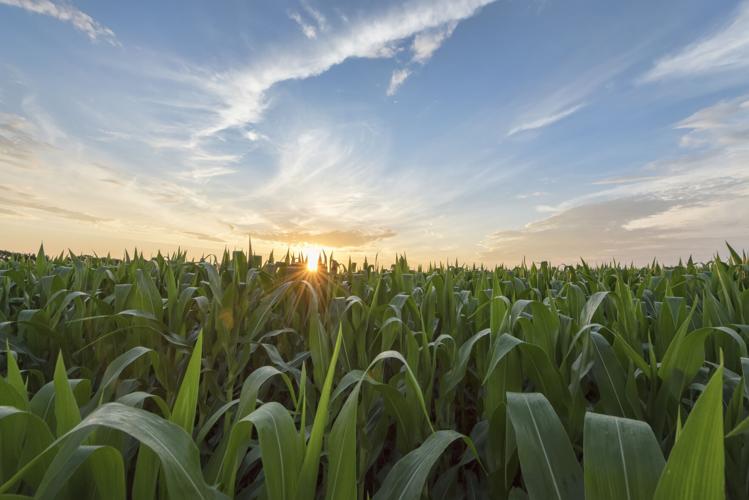
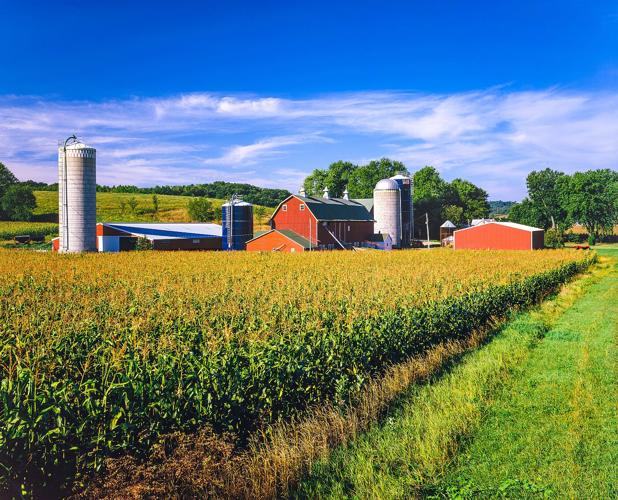
Central Illinois is farm country—more specifically, grain farming country.
Agricultural fortunes in the region rise and fall with corn and soybean prices, which like most things, are affected by the forces of supply and demand. And sometimes, those forces can stem from events unfolding far, far away from this corner of the Prairie State.
“One of my farmers had the best quote when I was talking to him a couple of weeks ago,” says Matt Hoose, chief agribusiness officer at Prospect Bank, headquartered in Paris. “He said, ‘We cannot be backyard thinkers.’ What he meant by that is, we can't just be thinking of what's happening in a three-county radius of where we sit. We have to always be thinking globally, even though we're farming in this area.”
These days, global events command the attention of everyone, farmers included. Ukraine, the world’s fourth-largest exporter of corn, was invaded by neighboring Russia on Feb. 24, sparking a conflict that’s put all aspects of normal life on hold in the eastern European nation. American farmers could be called upon to fill that production gap, and Hoose urges them to be prepared to find opportunity amid the uncertainty.
“We’re in the lead-up to planting the 2022 crop, which will start to happen in earnest in mid-to-late April,” Hoose says. “So now is the time to look at who worldwide is buying grain, and who is producing it. And what makes this year unusual is that one of the major sources of corn exports is Ukraine, and obviously with what’s happening there, they’ve shut ports down for commercial traffic—not just for corn, but for everything.”
‘A dynamic we’ve never seen’
A Central Illinois institution since its founding in Edgar County in 1873, Prospect Bank has long been a source of capital to area farmers looking to fund crop production, purchase equipment, or expand their acreage. Just as importantly, the agribusiness experts at Prospect Bank are a proven source of advice on the management of property, crops and finances, and identifying agricultural trends.

“Our primary role is to continue to be a steady source of capital for their farm, so they can quickly react to potential opportunities,” Hoose says. “And quite honestly, in years like this, our role is to be an advisor to them as well. We’ve had multiple conversations with farmers in the run-up to what’s happened in the market, and what we’re telling them is, this is not a time to speculate in the grain market. But it is a good time to lock in a good price for part of your 2022 production.”
The current uncertainty is reflected in the grain market—corn futures that sat at around $5.70 per bushel before the Ukraine conflict were up to roughly $6.25 recently, Hoose says, and ranged as high as $6.45 in between.
And the instability in the Black Sea region could also impact domestic planted acreage expectation for 2022, given that demand for U.S. products could exceed what’s historically been needed after grain earmarked for cattle feed and ethanol production is subtracted.
“Is Ukraine going to plant a 2022 crop? That’s anybody’s guess,” Hoose says. “They could produce nothing, or they could produce most of a crop if this thing were to settle down in the next six weeks or so. And, how much of their infrastructure has been damaged? There are questions I don’t know the answer to. But from what I’ve read, we could see a market disruption for probably the next 12 months. That’s a dynamic that we’ve never seen.”
Solid advice in a volatile time
It all makes the advice of experts like Hoose, who grew up on a family farm outside Rossville and studied agribusiness at Illinois State University, even more valuable. The agribusiness officers at Prospect Bank are there to help local farmers with their capital needs, to be certain, but also to assist them in interpreting the market and setting prices at a time when the worldwide grain market is facing more uncertainty than it’s experienced in decades.
Prospect Bank even has loans available that can help farmers navigate the process of buying options to set price floors, so they can guarantee that the lowest possible price for their crop will still be a good one. This is no time for backyard thinking, not now.
“Most of our farmers, they’re watching the same news, they’re reading the same articles, they’re seeing the same foreign publications that we all have access to,” Hoose says. “So, they’re aware of what’s going on. We’re here to remain a consistent source of capital for them, and just be here to bounce any ideas off of. I tell all my farmers, it’s good to have a written marketing plan, even if you don’t follow it to a T. You want to stay with a plan because the market is so volatile right now.”
Are you interested in learning more about how Prospect Bank’s agricultural products can help farmers navigate this uncertain time? Visit BankProspect/FarmWise, or visit one of its ten locations across Central Illinois and Indiana, including Terre Haute, call (877) 465-4154, or visit BankProspect.com for further information.


