

URBANA, Ill. (WAND) - A Gibson City woman now understands the importance of what's known as door-to-balloon time after she suffered a heart attack in July 2022.
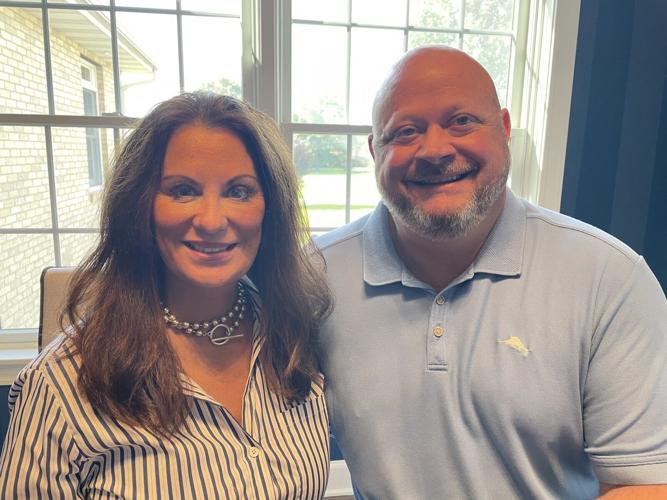
OSF HealthCare Heart of Mary Medical Center shared Tammi Fanson's story. In July 2022, Fanson had been dealing with high blood pressure, stress, fatigue, and shortness of breath. Fanson shared that she thought it was just life being difficult. However, she found herself at Gibson Area Hospital in the midist of a heart attack.
Fanson was taken to OSF HealthCare Heart of Mary Medical Center in Urbana and was fast-tracked straight to the cardiac catheterization laboratory at OSF Heart of Mary.
"They knew me," Fanson said. "They knew exactly what was going on. There must have been a lot of communication even before I got there. So it was very comforting."

OSF HealthCare said Fanson's case is an example of the importance of what's known as door-to-balloon time. This measures the time between when a patient has first contact with a medical professional to when a balloon is placed in their heart's arteries to get rid of blockages and resume blood flow. For Fanson, she had a balloon within 27 minutes of arriving at OSF Heart of Mary.
"Time is a muscle here in the cath lab," says Jo Lehigh, a registered nurse at OSF Heart of Mary who was on Fanson's care team. "Every minute that goes by could be tissue death."
On the balloon process itself, Lehigh shared physicians start by accessing an artery through a patient's wrist or groin.
"We send in a catheter. We go up into the heart and we shoot in contrast dye. The contrast dye helps us to visualize the artery to see where the blockage is located and how severe it is," Lehigh says. "And from there, the doctor goes in with a small balloon on the catheter and inflates the balloon. Then we'll go in with a stent and another balloon to open it up. So we have blood flow after it's all said and done."
The American Heart Association reports a heart attack strikes someone about every 40 seconds. It occurs when the blood flow that brings oxygen to the heart muscle is severely reduced or cut off completely. It happens because the arteries that supply the heart with blood can slowly narrow from a build-up of fat, cholesterol, and other substances.
Four heart stents later, Fanson is now recovering at home and is doing well. She's enrolled in cardiac rehabilitation, a typical but vital part of the path back to normal. Fanson shared that she appreciates the importance of diet, exercise, healthy blood pressure, and knowing your family history of heart troubles. And she's found ways to reduce stress, at least temporarily, like watching the sunrise with no distracting devices in sight.
"I could have easily went back to sleep that night," Tammi Fanson says, recalling the evening that changed her life. "Don't do that. Go in to the hospital. Get your regular checkups. And listen to your body."
If someone is having sudden, significant heart attack symptoms, don't drive yourself to the hospital. Call 9-1-1. To learn more, click here.
Copyright 2023. WANDTV. All Rights Reserved.


