NEW YORK (AP) — Wild swings that swept through financial markets overnight eased after Wall Street opened for trading on Monday. U.S. stocks rose modestly following gains in Europe and sharp drops in Asia, while gold and silver prices rallied back from severe earlier losses.
The S&P 500 added 0.5% and is on track to snap a three-day losing streak. The Dow Jones Industrial Average was up 317 points, or 0.6%, as of 10:15 a.m. Eastern time, and the Nasdaq composite was 0.6% higher.
Stocks of companies that make computer storage helped lead the market, adding to gains from last week following several profit reports that topped analysts' expectations. Airlines and cruise-ship operators were also strong, benefiting from a sharp easing of oil prices.
The center of the action in financial markets was again precious metals, where momentum suddenly halted after gold’s price roughly doubled in 12 months.
Gold briefly dropped below $4,500 per ounce in the overnight hours, down more than $1,000 from its high point reached just last week. It later pulled back to $4,742.80, down 0.1% from Friday.
Silver’s price has been on an even wilder ride recently, and it swung from a 9% loss overnight to a 0.3% gain.
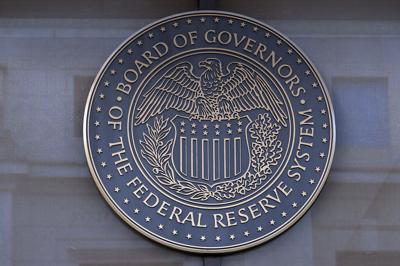
Gold and silver prices had earlier been surging as investors looked for safer things to own amid a wide range of worries, including a Federal Reserve that may be set to become less independent, a U.S. stock market that critics say is expensive, threats of tariffs and heavy debt loads for governments worldwide.
Their prices cratered on Friday, including a 31.4% plunge for silver. Some on Wall Street saw it as a result of President Donald Trump’s nomination of Kevin Warsh as the next chair of the Fed. Warsh’s reputation as a former Fed governor may have raised expectations among some investors that he may keep interest rates high to fight against inflation, which would reduce the need to hide out in gold and silver for protection.
But many on Wall Street are also skeptical of that initial reading and say the expectation from Trump is likely that Warsh will cut interest rates, something the president has been demanding. That could give the economy a boost, but also inflation.
The Fed chair has a big influence on the economy and markets worldwide by helping to dictate where the U.S. central bank moves interest rates. That affects prices for all kinds of investments, as the Fed tries to keep the U.S. job market humming without letting inflation get out of control.
The recent swoons for gold and silver are likely more about the washout for some traders who had borrowed money to bet on metals’ prices continuing to soar, rather than about a wholesale change in expectations for demand for metals, according to Darrell Cronk, chief investment officer for Wealth & Investment Management at Wells Fargo
On Wall Street, Sandisk leaped 11.4% to lead the S&P 500. The data-storage company added to its 6.9% gain from Friday, after it reported stronger profit for the latest quarter than analysts expected. It credited demand created by the artificial-intelligence boom, among other things.
That helped offset a 1.3% drop for Nvidia, whose chips are powering much of the world’s move into AI technology. The losses were worse in Asia, where AI winners plunged. South Korea’s Kospi fell 5.3% from its record for its worst day in almost 10 months after chip company SK Hynix lost nearly 9%.
In the bond market, Treasury yields edged higher after a report said that U.S. manufacturing grew last month, when economists were expecting a contraction. The yield on the 10-year Treasury erased an earlier dip and rose to 4.27%, up from 4.26% late Friday.
Oil prices dropped more than 4% after Trump told reporters that Iran is “seriously talking to us.” It’s a potential signal of improving relations between the two countries, which could prevent a possible disruption to the global flow of oil.
In stock markets abroad, European indexes rose nearly 1% following Asia’s washout. Japan’s Nikkei 225 fell 1.3%, while stocks fell 2.2% in Hong Kong and 2.5% in Shanghai.
AP Business Writers Matt Ott and Elaine Kurtenbach contributed.


