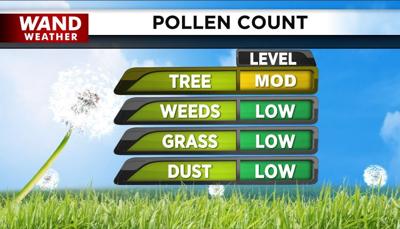

(WAND) - For Spring allergy sufferers, the joys of warmer weather, birds chirping and flowers blooming come at a price. Itchy nose and eyes, breathing difficulties and skin allergies can set in as trees begin to pollinate. While tree pollen season begins in February or March in Illinois, it doesn't peak until May.
Because pollen is microscopic, we cannot see it in the air and often do not know when the season has started until symptoms begin. A common myth regarding Spring allergies is that because symptoms often start in correlation with blooming flowers, the flower pollens contribute to the problem. Our allergies are actually due to plants that spread pollen by wind (anemophilous plants). The plants we typically notice are usually flowering plants that are pretty for the purpose of catching the attention of pollinators like bees and other insects. These plant pollens are spread from plant to plant by the insects that visit them (entomophilous plants). For this reason, most of our pollen exposure is due to pollen in the air outdoors, and thus our allergies are to wind-pollinated plants.
This is, of course, not to scare anyone away from the great outdoors. There are plenty of over-the-counter antihistamines along with Mother Nature's own pollen lull- July heat!
Welcome to Spring.


