
Who carries naloxone? In Sangamon County, people ready to save someone’s life
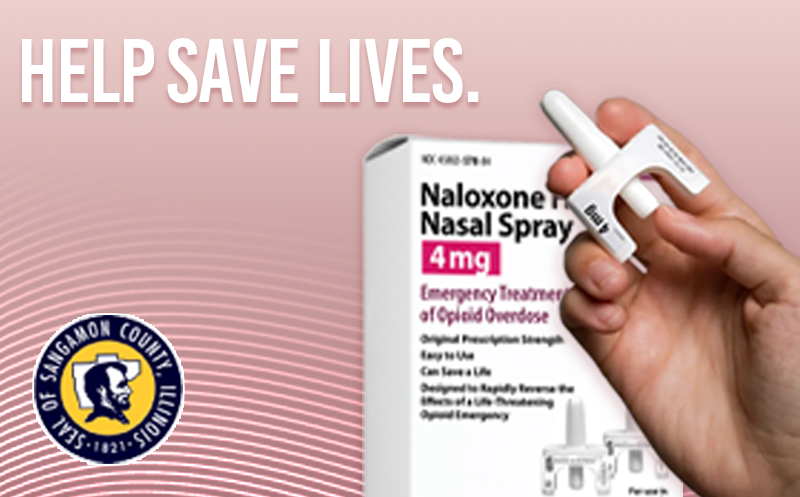
It looks innocuous enough, like a nasal spray you’d use when suffering from the common cold. But the medication contained within is so powerful, it can reverse the effects of an opioid overdose within minutes. And the people who carry it—well, in a state that’s seen a massive increase in synthetic opioid deaths over the past decade, it’s not an overstatement to call them heroes.
Indeed, naloxone can be a lifesaver for those suffering from an overdose. Those who carry it aren’t addicts, but concerned parents, friends, coworkers or neighbors trying to be prepared for the worst. The medication is available for free from the Sangamon County Department of Public Health, using it on a potential overdose victim is legal under Illinois law, and every life saved chips away at the unfair and wholly undeserved stigma that naloxone is carried only by users as a last resort.
“Some people see it as a source of embarrassment,” said Joan Thome, Director of Health Education at the Sangamon County Department of Public Health. “We've had so many people who, if we have it at a special event, they will walk by it and say, ‘Oh, I don't need any of that.’ Well, it's not for you. It's for somebody you'd like to save. So that's what we’re trying to get across.”
The stakes are real, especially with synthetic opioids like fentanyl proving particularly lethal. Since 2013, the number of deaths in Illinois due to synthetic opioids has increased 3,341 percent. In Sangamon County, overdose deaths have increased every year since 2019, and nearly half of all accidental overdose deaths were identified with fentanyl as a contributing factor.
Naloxone, then 911
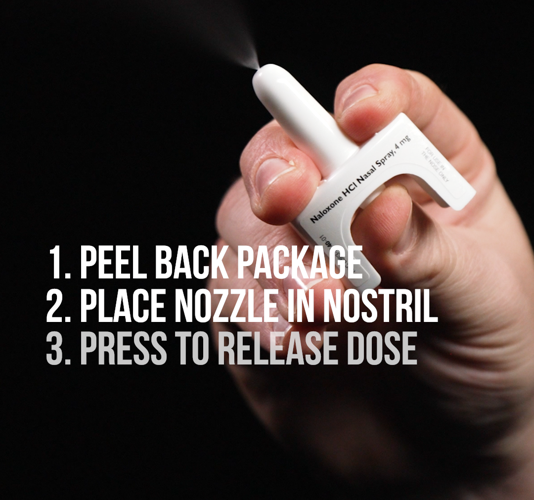
Naloxone typically comes in a box with two single-dose nasal spray applicators. The applicator nozzle is inserted into the nose of the person suffering the overdose, and a button depressed by the administrator’s thumb sprays the medication up into the mucus membrane. Naloxone quickly reverses the effects of an overdose for between 30 and 90 minutes, though it doesn’t cure the underlying addiction.

“It takes the drug off of the receptors of the brain, though it doesn't remove all of them. It does enough to get a person breathing again, or get a person to wake up,” Thome said. “And once people react with this, they're in withdrawal. So we just want them to wake up and then let them be in the hands of somebody else when 911 comes. So we always want to make sure and encourage people to call 911 when it happens, because that could be a way for somebody to access recovery by going to a hospital or talking with an EMT.”
Naloxone can be used if someone is unconscious or passed out, is having trouble breathing, or isn’t breathing at all. The medication is not addictive, and works only when someone has opioids in their system. If the person doesn’t have opioids in their system, the medication won’t do any harm. There’s a reason, after all, why more and more police officers, emergency medical technicians and other first responders nationwide carry naloxone—it’s proven to be safe and effective, and it can save someone’s life.
Under Illinois law, anyone can carry and administer naloxone without fear of any legal or civil issues, even if the person overdosing ultimately passes away. Using the medication on an overdose sufferer is akin to administering CPR to someone who appears to be having a heart attack, Thome said. “These laws were put together to encourage people to have Naloxone with them,” she added.
The state’s Good Samaritan Law encourages people to call emergency services when someone is overdosing, and protects people who provide medical care in good faith. Illinois also has a Statewide Standing Order acting as a prescription which allows for overdose education and naloxone distribution to anyone who wants to be prepared to respond to an overdose.
Grab it and go

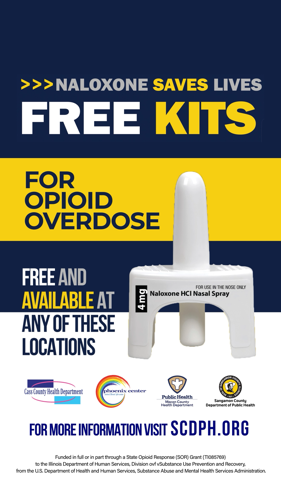
In Central Illinois, free naloxone kits are available at the Sangamon County Department of Public Health, as well as Phoenix Center Springfield, the Cass County Health Department and the Macon County Health Department. In Sangamon County, they’re right in the front reception area—people can just grab them and go.
Because oh, that unfair stigma again. “We don’t want them to have to ask for it,” Thome said. “We had a lady come in and grab a couple of boxes, and I said, ‘Thanks for being prepared.’ She said, ‘Oh no, it’s not for me, it’s for someone I work with.’ People don’t even want to be seen reaching for it. So we’re trying to get over that.”
Bit by bit, Thome tries to chip away at that misconception—by talking to community groups, church groups, business organizations, police and fire departments, schools, whoever else will listen. “Having it doesn’t mean you’re a drug addict,” Thome said of naloxone. “Having it means you want to be there for someone else.”
Are you interested in more information on naloxone—how to get it, or training on how to use it? Contact the Sangamon County Department of Public Health at (217) 535-3100, stop by their main office at 2833 South Grand Avenue East in Springfield, or visit their website for further information.


