


DECATUR, Ill. (WAND) — Archer Daniels Midland Co. has temporarily paused CO2 injections at one of the company's carbon sequestration wells in Decatur.
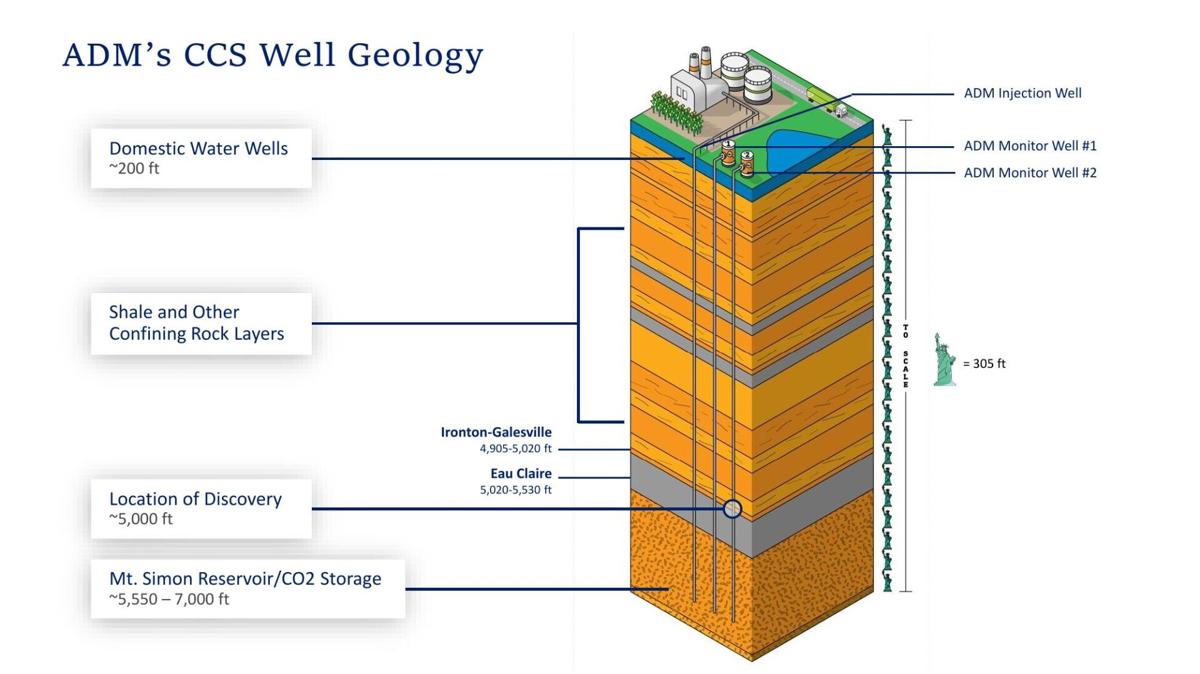
According to a statement from the company, the possible leak of brine, or salty water, was detected at a depth of around 5,000 feet. ADM said that it notified the US Environmental Protection Agency and is conducting additional tests in consultation with the EPA and other experts.
Last month, the EPA announced a proposed enforcement order to ADM for alleged violations of the Safe Drinking Water Act related to the company’s carbon sequestration injection project in Decatur.
The EPA alleges the company violated its Class VI Underground Injection Control permit when injected fluid migrated into an unauthorized zone roughly 5,000 feet deep. The information that the EPA has reviewed does not suggest any threat to drinking water in the area.
The U.S. EPA has since released the following statement:
On September 27, Archer Daniels Midland informed EPA that “as a proactive measure” the company had temporarily stopped injections at its carbon sequestration project in Decatur, Illinois, after detecting a suspected leak in one of its two monitoring wells. EPA had previously directed ADM to conduct additional testing, resulting in the discovery of the suspected leak. EPA concurs with ADM’s decision and has requested additional information about the nature of the leak and company’s plan for resuming operations. EPA will provide updates as they’re available.
Previously, on September 19, EPA issued a proposed enforcement order to ADM for alleged violations related to holes in the other monitoring well at the site. The leaks in both wells are roughly 5,000 feet below ground level. The information that EPA has reviewed does not suggest any threat to drinking water in the area. Nearby public water systems draw from the Lake Decatur reservoir or use wells less than 110-feet deep.
More information is available on EPA’s website.
The Protect the Mahomet Aquifer Coalition has repeatedly expressed concerns about the injection wells.
"This second leak in less than a year proves that carbon capture is not the safe, reliable technology its proponents claim it to be," said Pam Richart, co-director of Eco-Justice Collaborative and member of the Protect the Mahomet Aquifer Coalition. "Our drinking water cannot be put at risk by these ongoing failures. It’s time for lawmakers to step in and ban CCS projects under the Mahomet Aquifer once and for all."


