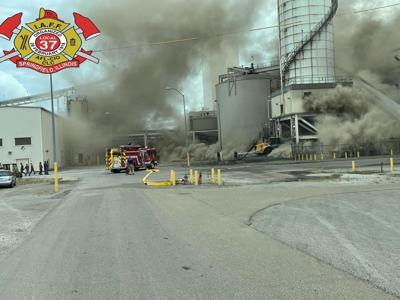
SPRINGFIELD, Ill. (WAND) - City Water, Light and Power leaders in Springfield said an opened valve led to the release of ash Tuesday at the Dallman Power Station, which ended up forming a dust cloud.
Cleanup continued overnight Tuesday after the situation began unfolding before 4 p.m. At that time, CWLP leaders said maintenance personnel removed a valve on an ash silo to clear blockage caused by a filter bag in the unit. Taking off the value allowed the ash to release.
The cloud release was stopped after 5 p.m. Tuesday with the help of the Springfield Fire Department and CWLP. Responders used water to contain the powder-like material to the site.
Leaders with CWLP said they will continue to investigate the cause and protocols in place that led to the dust cloud forming.
“The procedures in place for this silo system should have never dictated this valve be removed anytime any material is within the silo,” said CWLP Chief Utility Engineer Doug Brown. “Our staff will be taking a deep look at how this situation was misread, corrective action will be taken and if there are any shortfalls in procedures—those will be updated so that this can never happen again.”
CWLP plant personnel reported the release to all required responding agencies, a press release said, including the Springfield Fire Department and its Hazardous Material Response Team, the Illinois Environmental Protection Agency and the Illinois Emergency Management Agency.
An inspection was conducted by IEPA after the incident. CWLP is hiring an environmental contractor for deeper site cleanup and mitigation.
Officials said risks from the ash release to water supply operations and electric plant operations were avoided due to the quick response of agencies.
"The prompt response by SFD and CWLP protocols enacted by plant personnel to stop the ash clouds, and the rain in the area that followed, also limited the time possible for inhalation exposures to the public," the release said. "The CDC indicates fly ash may pose an inhalation hazard when dry, including respiratory irritation. Acute symptoms of exposure are defined as excessive inhalation of dust possibly causing upper respiratory tract irritation including sneezing and coughing. Eye contact can cause redness and pain. Skin contact (especially on moist skin) can cause moderate irritation."
There was no damage to the silo and no injuries were reported.


