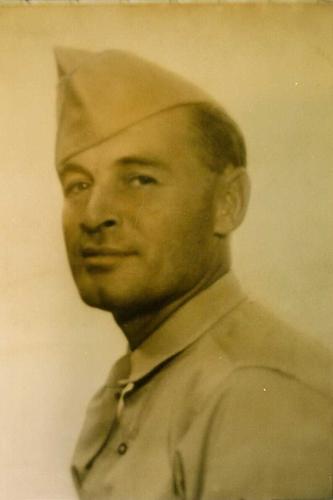
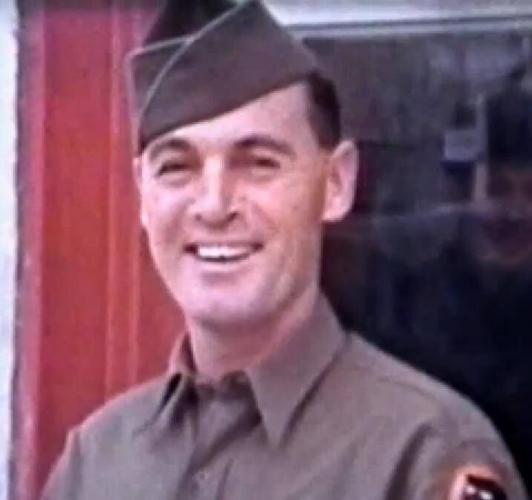


WASHINGTON (WAND) - The remains of a World War II soldier from Illinois have been identified following DNA testing.
Army Tech. Sgt. Arthur W. Countryman, 37, was killed in November 1944 when he was assigned to Company F, 12th Infantry Regiment, 4th Infantry Division. His unit was part of a battle with German forces near Hurtgen, Germany in the Hurtgen Forest, and he was reportedly killed in action on Nov. 20.
His body was not recovered following the battle.
The American Graves Registration Command (AGRC) was tasked with investigating and recovering American personnel in Europe. Several investigations were conducted in the Hurtgen area from 1946 to 1950, but Countryman's remains were not found. In September 1951, he was declared non-recoverable.
Later on, while looking into unresolved American losses in Hurtgen, a DPAA historian determined one set of unidentified remains, designated X-5430 Neuville, possibly belonged to Countryman. These remains were initially found by a German woodcutter and recovered by AGRC in 1947. They were buried in Ardennes American Cemetery in 1950.
In April 2019, the remains were disinterred and sent to the DPAA lab at Offutt Air Force Base in Nebraska for identification.
Scientists used dental and anthropological analysis, as well as circumstantial and material evidence, to identify Countryman's remains. Additionally, scientists with the Armed Forces Medical Examiner System used mitochondrial DNA (mtDNA), Y chromosome DNA (Y-STR) and autosomal DNA (auSTR) analysis.
Countryman was accounted for on June 14, 2021.
Countryman's name is shown on the Walls of the Missing at Netherlands American Cemetery, an American Battle Monuments Commission site in Margarten, Netherlands, along with others who are still missing from World War II. Officials will put a rosette next to Countryman's name to show he has been accounted for.
He will be buried in his hometown of Plainfield on Aug. 6, 2021. The public can contact the Army Casualty Office at (800)892-2490 for family and funeral information.
"DPAA is grateful to the American Battle Monuments Commission and to the U.S. Army Regional Mortuary-Europe/Africa for their partnership in this mission," a press release said.