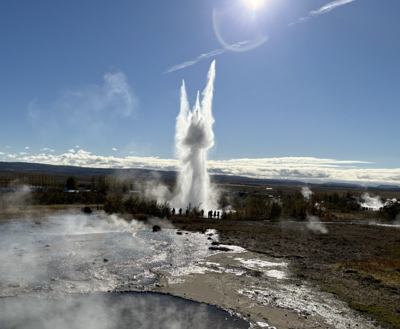

(WAND) - Did you ever witness a geyser and wonder what was going on, scientifically? Well, wonder no more.
A geyser is a natural hot spring that periodically erupts, spewing water and steam into the air. The process behind a geyser’s activity involves complex interactions between underground water, heat, and pressure.
As water is heated, it begins to convert into steam. However, the surrounding rocks and pressure keep the water from boiling immediately. The pressure in the underground chamber increases as more water is heated and more steam is generated.
A narrow passage connects the underground chamber to the surface. The structure of this passage is crucial for the geyser’s eruptions. When the pressure becomes high enough, the superheated water and steam force their way up through the passage. The pressure drops as the water rises, causing some of the water to flash into steam. The sudden release of pressure causes a violent eruption, propelling hot water and steam out of the geyser’s vent.
After the eruption, the underground chamber refills with water, and the process begins again, resulting in periodic eruptions.
Photo courtesy Kosek Photography, Haukadalur Geothermal Field, Iceland