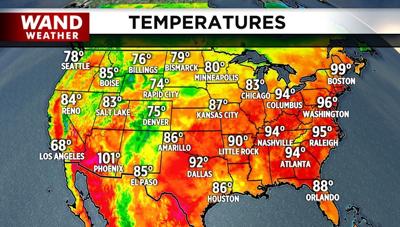

DECATUR, Ill. (WAND) - The urban heat island effect refers to the phenomenon where urban areas experience higher temperatures than surrounding rural communities.
This occurs primarily due to the physical makeup of cities as well as human activity. Key contributing factors include:
-Surface Modification: Natural vegetation is replaced with concrete, asphalt, and other materials that absorb and retain heat.
-Reduced Vegetation: Less greenery means less shade and cooling through limited evapotranspiration.
-Building Size: Tall buildings and dense infrastructure trap heat.
-Waste Heat: Emissions from vehicles, industry, air conditioning, and other sources add to the local heat.
-Limited Natural Cooling: Urban areas often lack sufficient open spaces and bodies of water to help dissipate the heat.
Chicago has massive Lake Michigan that helps temper high heat, but the wind isn't always off the lake. Farther south, the mighty Mississippi River runs up along the east side of St Louis, but even here the river isn't large enough to prevent this urban heat island effect.
Factor in a west wind at times, and both cities will run higher temperatures than surrounding areas. Even in central Illinois, city temperatures will run higher than smaller towns, in general.
Copyright 2025. WANDTV. All Rights Reserved.


