OAKWOOD, Ill. (WAND) – Environmentalists are warning a “coal ash disaster” may occur on the Middle Fork of the Vermilion River near Oakwood if unlined ash pits are not removed.
“Our concern is another storm event like we had last February, or maybe two, could result in a coal ash disaster if nothing is done now,” said Pam Richart of the Eco-Justice Collaborative. “I think it is a critical time for action to be taken.”
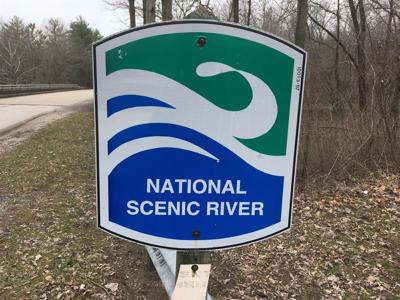
The Vermilion Power station, originally opened in the 1950s by Illinois Power, was closed in 2011. Over the years coal ash, the waste product from burning coal, was dumped into three unlined coal ash pits. The pits sit in a floodplain next to the Middle Fork. The Middle Fork is the states only designated national scenic river.
In May, the Prairie Rivers Network filed a lawsuit against Dynegy, the successor company to Illinois Power, claiming the company violated the clean water act.
“This year it looks worse then it ever looked before,” Andrew Rehn of Prairie Rivers Network told I-TEAM reporter Doug Wolfe. “Now it looks like there’s maybe 200 feet of seeping river bank.”
I-TEAM cameras recorded video of a long area of bank which is discolored from apparent coal ash seeps. Those steadily flowing seeps are going directly into the Middle Fork. The lawsuit contends sampling shows a “toxic soup” including boron, arsenic, iron, lead, and nickel.
“Orange, purple, sometimes a shimmery color and that’s all toxic coal ash pollution seeping into the Middle Fork,” Rehn stated. “It’s a violation of the clean water act to have any seeps into the river that aren’t permitted.”
Vistra Energy, the current owners of the Vermilion Power Station, was recently cited by the Illinois EPA which noted rock filled gabions, meant to protect the riverbank from erosion, were damaged, found downstream or were completely missing.
Vistra tells WAND News it “respectfully” denies the allegations and intends to continue to obtain approval for riverbank stabilization and permanent closure plans. The company went on to say in a July release in the face of naturally occurring erosion and historic flooding its coal ash impoundments held firm and no material was washed into the river.
Lan Richart of the Eco-Justice Collaborative says riverbank stabilization should only be an interim step and the coal ash pits need to be removed.
“That would eliminate the pollution problem. There would be no more erosion problem and we think that is the best permanent solution,” Richart said.