


DECATUR, Ill. (WAND) — A partnership between the Decatur Police Department and Heritage Behavioral Health Center is putting mental health professionals directly into the hands of officers responding to crises.
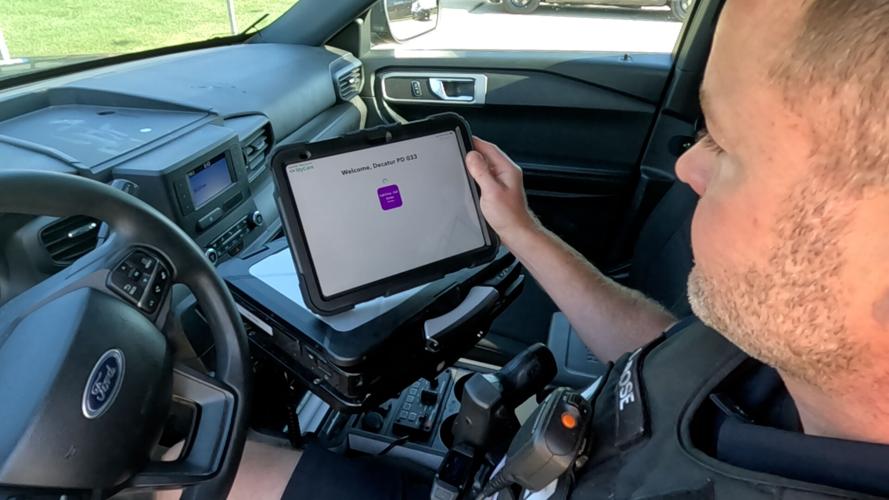
The agencies have launched a crisis tablet program that allows officers to instantly connect people experiencing a mental health or substance use crisis with a live Heritage clinician through video chat.
Mary Garrison, president and CEO of Heritage Behavioral Health Center, said the program is the first of its kind in Illinois and is already helping officers de-escalate situations while connecting people to the services they need.
"We wanted to enhance that, to really give a tool to the officers to have while they're interacting with an individual," Garrison said. "The officer can say, 'We've got a situation here. We think they need support.' The clinician will come in and talk to the individual via video, and then work with the officer to make decisions about what can happen next."
The tablets, known as MyCare responder tablets, allow officers to hand a device directly to someone in crisis. With the push of a button, that person is connected to a live Heritage crisis worker who can assess the situation, provide support and determine the next steps.
Those next steps could include connecting someone with Heritage's crisis unit, arranging additional services, de-escalating the situation, or determining that no further intervention is needed.
The program builds on a long-standing partnership between Decatur police and Heritage Behavioral Health Center.
"The partnership between Heritage and the police department has always been strong," said Decatur police Lt. Todd Koester. "It's really gotten stronger in the last five years or so, coming together to try to make the community safer and work together to help everybody in the community."
Garrison said regular meetings between agency leaders helped create the foundation for the new initiative.
"We've been having quarterly meetings for quite a while," Garrison said. "We're really talking through what are some of the challenges that leadership and officers are seeing on the streets, and how can we show up to support them and the individuals experiencing a crisis."
Before expanding the program department-wide, Heritage and Decatur police spent months testing the technology. They initially rolled out six tablets to officers and gathered feedback before making adjustments and expanding the program.
"We knew we had one opportunity," Garrison said. "If there is a crisis and we're not responding and the technology isn't working the way it should, they would say, 'I'm not going to do this any longer.' So we piloted it on a very limited basis."
Koester admitted he had some reservations when the technology was first introduced.
"I believe I had a little apprehension because it's technology and you don't know how user-friendly it's going to be," he said. "But once Heritage rolled it out and showed it to us, it's literally one click for an officer to reach a crisis worker within seconds. It was a no-brainer."
The program has since expanded from six tablets to approximately 40 devices spread throughout the department in patrol cars.
"Our SWAT team could use it in a negotiation situation if we had a barricaded individual. We have plenty for patrol and some extras in the building," Koester said.
Heritage's 24-hour crisis services support the tablets, ensuring help is available at any time.
"Our crisis services are 24/7," Garrison said. "These tablets are across all three shifts, so at three in the morning, an officer can call in and get someone live."
Police officials say the technology is already making a difference.
Koester recalled a recent incident in Downtown Decatur involving a person who requested help from a crisis worker.
"The officer said, 'Would you want to talk to someone through our MyCare technology?'" he explained. "The situation was resolved, the officer was able to go about their day within a few minutes, and Heritage made contact with the person later in the day and provided them with the services they needed."
For officers, the tablets provide an additional resource during situations that often require expertise beyond traditional law enforcement training.
"When someone is in crisis, the first people they're going to call [are] 911 and get a police officer," Koester said. "We're trained police officers, but we're not trained crisis workers. So having that ability in your squad car with you as a tool in the tool belt."
Garrison said Heritage Behavioral Health Center fully funds the program as part of its broader crisis response efforts.
"The actual MyCare program is being funded by Heritage," she said. "It's a significant investment for us because it's helping people. We're probably saving money because we're helping people who are out in the community anytime, anywhere."
Officials hope the program's success in Decatur will eventually serve as a model for communities across Illinois.
"We are the first in Illinois," Garrison said. "We've actually shown this to the state and are looking at trying to develop this in other areas across the state. We're hoping to be a leader in increasing access to care for individuals who are in crisis."
For Koester, the program reflects the department's commitment to finding new ways to serve the community.
"Every situation is not going to be solved with a tablet. Every situation is not going to be solved with a phone call," he said. "But we're trying. We're adding more tools to the tool belt every day to bridge that gap and create the successful outcomes that are needed."
Copyright 2026. WAND TV. All rights reserved.


