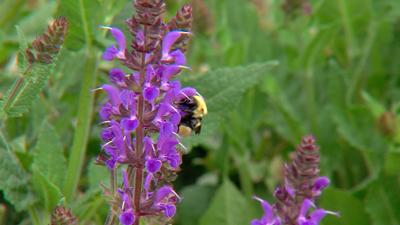



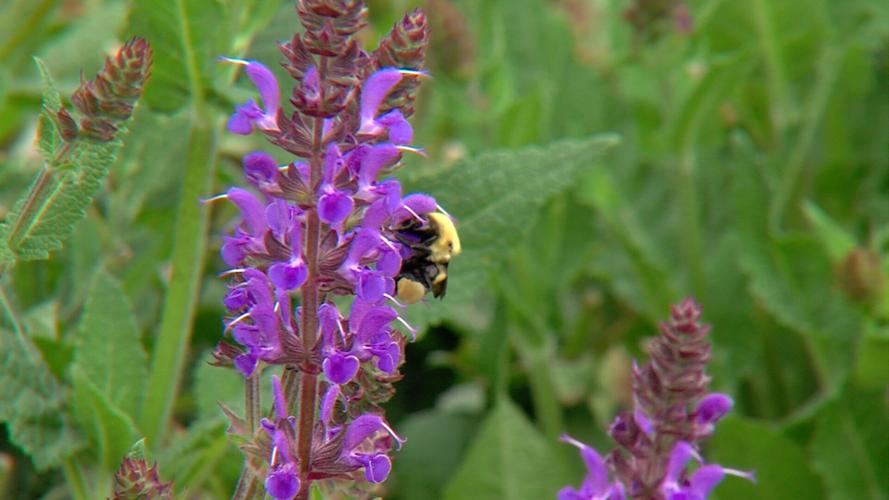
DECATUR, Ill. (WAND) — Bees, butterflies, moths and other pollinating insects may be small, but experts say their impact on Illinois ecosystems and food production is enormous.
June is National Pollinator Month, a time dedicated to raising awareness about the critical role pollinators play in supporting agriculture, native plants and wildlife. According to the University of Illinois Extension, pollinators help reproduce many flowering plants and pollinate roughly one-third of the crops people eat.
"Pollinator Month is an important celebration of our pollinating insects," said Ryan Pankau, horticulture educator with University of Illinois Extension. "They're very important for our food supply. About a third of the crops that we eat are insect-pollinated, but also in natural plant ecosystems, they fuel fruit and seed production. They're essential to a lot of things that happen on the ecological level as well as with plants."
Extension officials said pollinator populations have faced increasing challenges in recent years due to habitat loss, pesticide use and other environmental pressures. Pankau said the issue extends beyond bees and butterflies.
"In recent years, there's been a lot of research into insect decline in general," Pankau said. "That's not just pollinators. That's insects around the globe."
He explained that insects serve as a foundation of the food web, helping transfer energy from plants to birds, mammals and other wildlife.
"If we start to lose these insects that are an important base for everything, then food webs start to collapse, and there will be a ripple effect," Pankau said. "It's been shocking to me to see some of the research that has come out in the last several decades on insect decline."
To help reverse those trends, University of Illinois Extension has developed several programs aimed at educating residents and expanding pollinator habitat throughout the state.
One of those efforts is the Pollinator Pockets program, which encourages homeowners and gardeners to create pollinator-friendly spaces in their yards. Participants can register their gardens and receive signage identifying the area as a pollinator habitat. Extension also maintains resources through the Illinois Pollinators website, which helps gardeners identify native plants that support bees, butterflies, moths and other beneficial insects.
"We send you a nice little sign that says Pollinator Pocket," Pankau said. "It's meant to be an outreach and educational program where it educates the folks that get the signs, and then it also tells others that your garden is important for pollinators."
Across Illinois, Extension staff and Master Gardener volunteers have also established community gardens designed to provide season-long food sources for pollinators.
"Not only are we thinking about ornamental beauty when we plant these spaces, but also support of pollinators and having a season of blooming plants that start as early in the season as we can and go all the way through fall," Pankau said. "So pollinators have that important food source."
University of Illinois Extension is encouraging residents to celebrate Pollinator Month by planting native flowers in backyards, containers and community gardens. Native plants are especially valuable because they have evolved alongside local pollinators and provide reliable sources of nectar and pollen while thriving in Illinois growing conditions. Examples include milkweed, coneflower, bee balm, black-eyed Susan and prairie blazing star.
"If you're interested in protecting pollinators, one of the things you can do really simply is start to add native plants to either your garden space, containers on your front step, or wherever you can plant them," Pankau said. "We know that native plants have an exclusive relationship with our native pollinators, and they're really important for that support."
Pankau also encourages residents to rethink common landscaping practices. Limiting pesticide use can help protect beneficial insects, while reducing unnecessary outdoor lighting can lessen disruptions to nighttime pollinators such as moths.
"The use of pesticides has been shown worldwide to [have] a huge impact on pollinators," he said. "Think about what you're trying to accomplish and whether there are other ways we could accomplish that without the use of that chemical."
For more information about creating pollinator-friendly landscapes, residents can visit Illinois Extension's pollinator resources and plant selection tools.
Here is a list of events happening around Champaign.
Copyright 2026. WAND TV. All rights reserved.