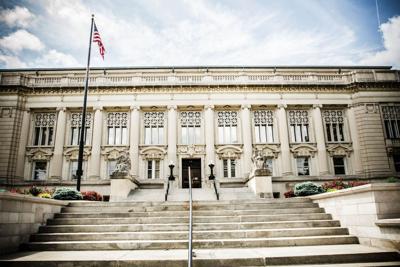

SPRINGFIELD, Ill. (WAND) — Illinois was set to abolish cash bail on January 1, 2023 in accordance with the pretrial fairness portion of the SAFE-T Act. However, over 60 state attorneys and sheriffs had other plans and filed a lawsuit to block the law from taking effect. The Illinois Supreme Court heard oral arguments on the constitutionality of the plan Tuesday morning.
Criminal justice advocates have fought for years to see Illinois eliminate cash bail. The Illinois Supreme Court could make their wish a reality with its 5-2 Democratic majority.
The Illinois Constitution states all people shall be bailable by sufficient sureties. Deputy Solicitor General Alex Hemmer told the Supreme Court that the SAFE-T Act did not amend the constitution, contrary to popular belief of sheriffs and state attorneys.
"Eliminating monetary bail doesn't violate the bail clause because all the General Assembly has done is confer on criminal defendants a statutory right that exceeds the floor set by the constitution," Hemmer said.
Hemmer stressed that the elimination of cash bail is consistent with the bail clause because it is a safeguard for anyone seeking pretrial release.
Justice Lisa Holder White noted that previous changes to cash bail were made through constitutional amendments, but Hemmer said lawmakers were not required to bring the question to voters for the SAFE-T Act.
"That clause grants criminal defendants a qualified right to seek pretrial release. It makes them bailable," Hemmer said. "It doesn't require the state to maintain any particular method of obtaining pretrial release, including the system of monetary bail."
Although, Kankakee County State's Attorney Jim Rowe said the SAFE-T Act abolishes the opportunity for attorneys to request cash bail as a sufficient surety. Yet, Chief Justice Mary Jane Theis quickly called that into question.
"State's attorneys are the only ones that can go into a courtroom and file a petition under the Defendant's Act to deny bail to someone," Rowe said.
"Isn't that true now," Theis asked.
"That is true your honor. Except in this instance, we would be asked to enforce a rule that plaintiffs believe is unconstitutional," Rowe explained.
Rowe said Democratic lawmakers tried to expand the list of non-bailable offenses and abolish cash bail through a mere proposal. Plaintiffs believe the General Assembly had the opportunity to accomplish the same goals by bringing the question to voters through a constitutional amendment. Rowe said the Supreme Court Commission's report identified that constitutional amendment questions worked for voters in New Jersey and New Mexico.
"In both of those states, they accomplished comprehensive and significant bail reform. But they did it through the amendment process," Rowe added. "They let the residents of their state have a say. They made sure that they followed the will of the people."

Two nurses from the Chicagoland area believe their hospitals violated the state's biometric information privacy law.
Attorney General Kwame Raoul spoke with reporters after the 50-minute hearing ended Tuesday. Raoul said he agreed with Hemmer's argument that Illinois didn't need a constitutional amendment to enact the necessary reforms.
"There's nothing specific in the constitution that mandates that cash bail be preserved as a sufficient surety," Raoul said. "I think the plaintiffs could not overcome that."
Will County State's Attorney Jim Glasgow said he is glad the Illinois Supreme Court put a stay on the law in January so both sides could be heard in court. Glasgow said plaintiffs feel very strongly that this is a public safety issue, even though many attorneys and sheriffs want to help reform the bail system.
"We realize that that's an absolute requirement," Glasgow said. "But there are also situations where the courts have to have the ability to control in cases of violence."
Gov. JB Pritzker told reporters in Bloomington that he watched a portion of the oral arguments on his drive to a press conference about higher education. Pritzker said it was fascinating to listen to both sides.
"It's clear to me that there's one side that has the much better argument on the SAFE-T Act, and I think that will prevail," Pritzker said.
Many expect the Supreme Court to announce opinions on the case in late April or May.
Copyright 2023. WAND TV. All rights reserved.


