

SPRINGFIELD, Ill. (WAND) - In an attempt to get smokers to properly dispose of cigarette butts, a new type of bin has been installed in the Springfield area.
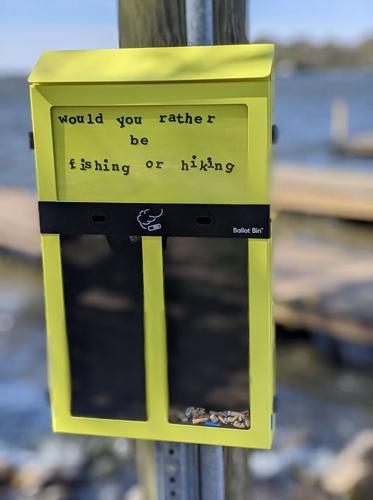
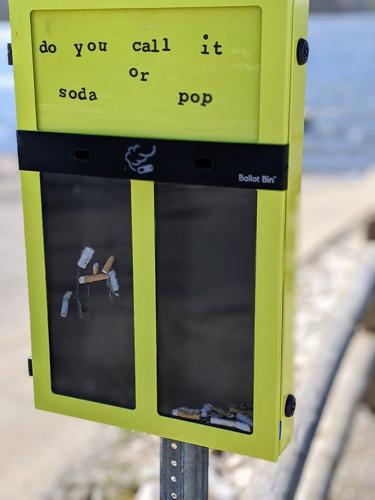
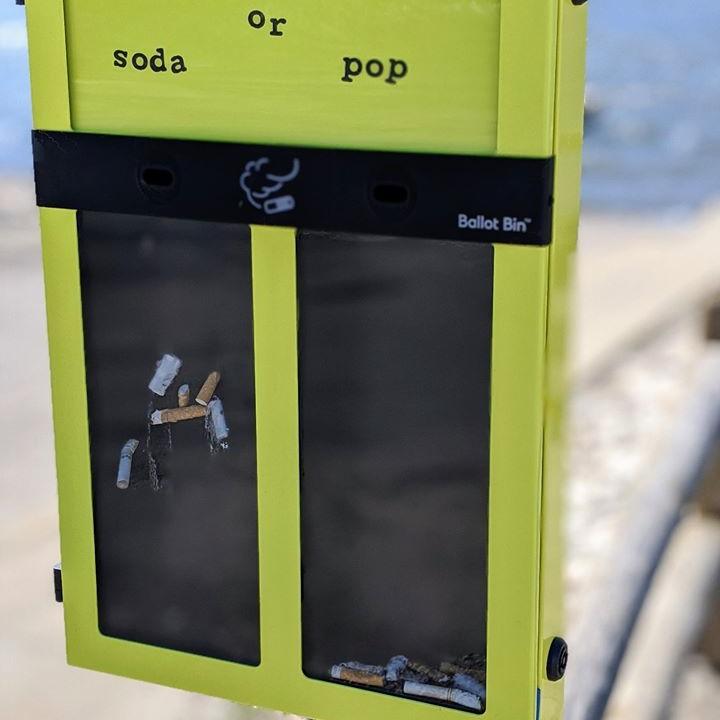
Instead of typical anti-litter signage, the University of Illinois Springfield Field Station at Lake Springfield and City Water, Light and Power (CWLP) have partnered to install voting bins. Each bin asks a smoker to vote with their cigarette butt on questions such as "Which team is better: Cubs or Cards?" or "Would you rather be fishing or hiking?"
The bright yellow bins are now set up for use at three locations around Lake Springfield, including Marine Point, the Lindsay Boat Launch and the boat launch just east of Spaulding Dam.
When the bins are filled, workers collect the cigarette butts and properly recycle them.
“These ballot bins have been used around the world,” said Anne-Marie Hanson, UIS associate professor of environmental studies. “The company that produces the bins claims that studies have found the bins have reduced cigarette butt litter by 46 percent. Most of the bins have been deployed in cities on high traffic sidewalks and common areas for smoke breaks, so we are interested to see our results around the lake.”
UIS researchers have been encouraged by results so far, as several cigarette butts were seen in the bins just 24 hours after installation. They hope the bins raise awareness for how harmful litter is to wildlife, fish and local waterways.
“Cigarette butts continue to be the single most collected item in beach clean-ups and litter surveys, from central Illinois waterways to city streets to ocean coastlines,” said Hanson. “In addition to leaching harmful toxins into the environment and being mistakenly consumed by fish and birds, cigarette butts are primarily made of plastic (all those fibers in the filter are plastic).”
Officials hope to install more bins if this initiative proves successful. Bins might be moved as researchers learn where they are effective and where they aren't.
They are expected to stay in place for the immediate future.
“Cigarette butts have become such an everyday part of the landscape, that in many situations they are not seen as litter and are assumed to be less harmful than other types of litter,” said Tom Rothfus, director of UIS field stations. “This is a very different strategy than the typical anti-litter sign, and we hope it will get people talking about cigarette butt litter in a new way.”


